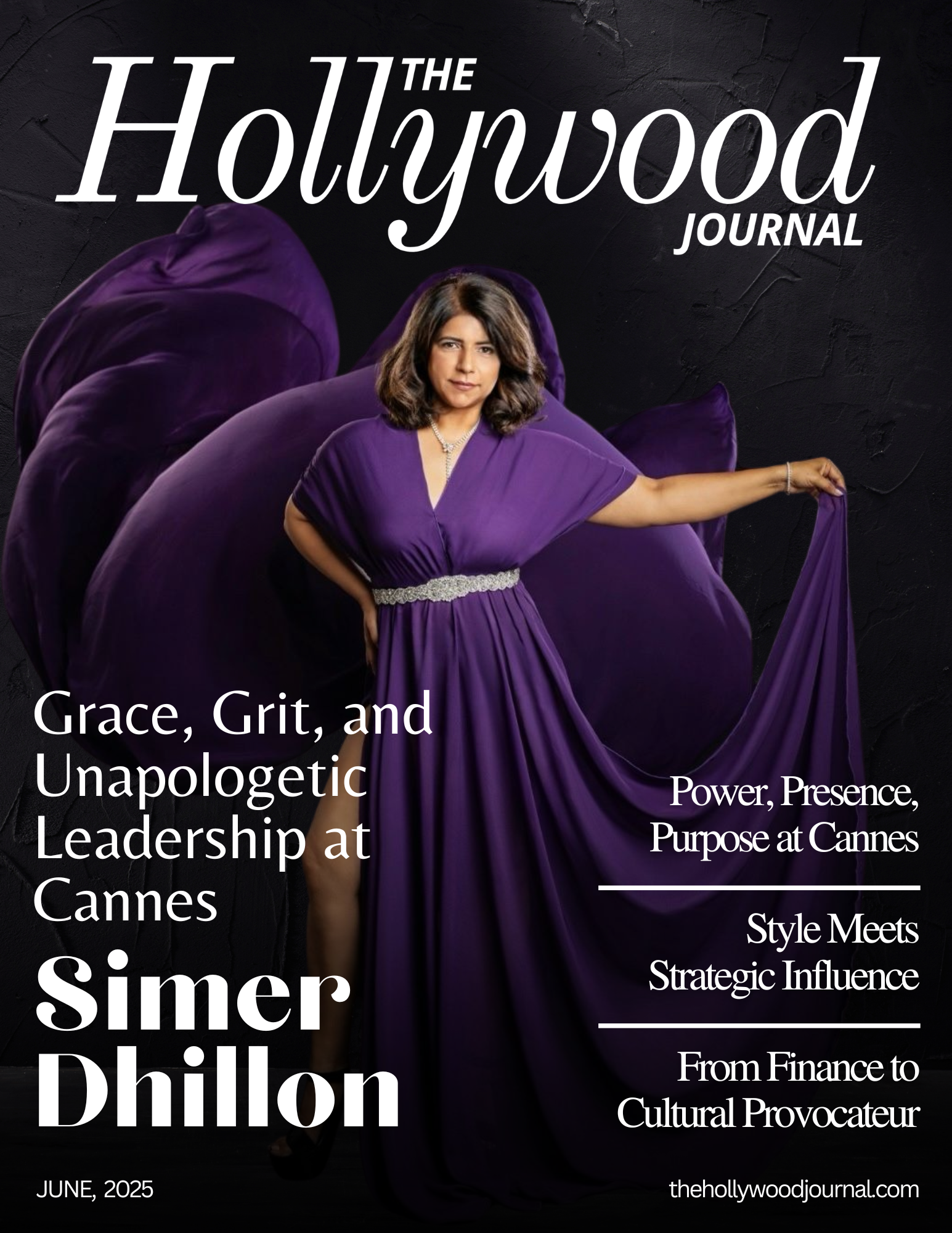
On May 20th, as the Mediterranean sun casts its golden light across the Croisette, Simer Dhillon will ascend the famed steps of the Palais des Festivals. In a world of manufactured celebrity, she arrives as something altogether different – a strategist turned cultural provocateur, carrying a message far weightier than her couture gown’s trailing fabric.
“I’m not here to pose,” Dhillon tells me during our conversation before her Cannes debut. There’s steel beneath the polish of her words. “I’m here to speak for every woman who’s been told to tone it down, for every woman whose power was underestimated.”
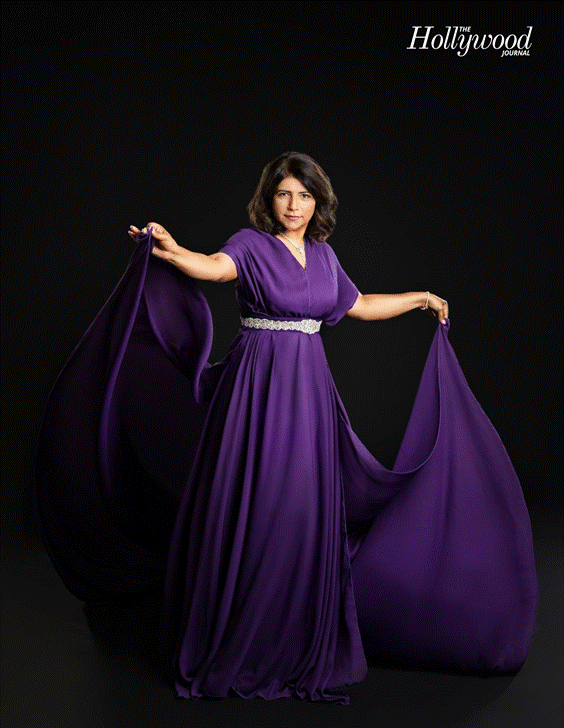
The finance executive turned leadership consultant represents a curious anomaly at an event traditionally dominated by studio executives, directors and actors. Her presence signals a shift in what cultural influence looks like in 2025.
Cannes this year bears the theme “Tailored for You” – an apt metaphor for Dhillon’s career trajectory. Having navigated the razor-edged corridors of global finance, she has methodically reconstructed her professional identity through her platform “Sharp Mind, Sharp Style,” where executive acumen meets deliberate visual presence.
“Leadership doesn’t ask for permission,” she observes with the quiet certainty of someone who has tested this theory. “It strides in, styled in self-respect and rooted in purpose.”
Her forthcoming book, “Grace in the Grit,” promises to decode the delicate balance between vulnerability and unwavering vision – concepts often positioned as mutually exclusive for women in leadership positions.
What makes Dhillon’s Cannes appearance noteworthy isn’t merely her access to this rarefied world, but how she’s leveraging it. In an environment engineered for spectacle, she arrives with substance. While flash bulbs capture the moment, her intent reaches beyond it.
“I’m not here to impress,” she says, “I’m here to be felt.”
Her mantra – “Let’s lead loud. Let’s lead beautiful. Let’s lead without apology” – could easily collapse into hollow corporate feminism in less thoughtful hands. Yet Dhillon delivers it not as slogan but thesis statement, tested through personal experience and professional transformation.
As Cannes unfolds this year, beyond the customary parade of cinema luminaries, Dhillon’s presence marks something subtler yet potentially more enduring – a recalibration of what power looks like when wielded with intention rather than inherited through tradition.
In a festival built on storytelling, she brings her own narrative – one where presence itself becomes the protest, and visibility the victory.