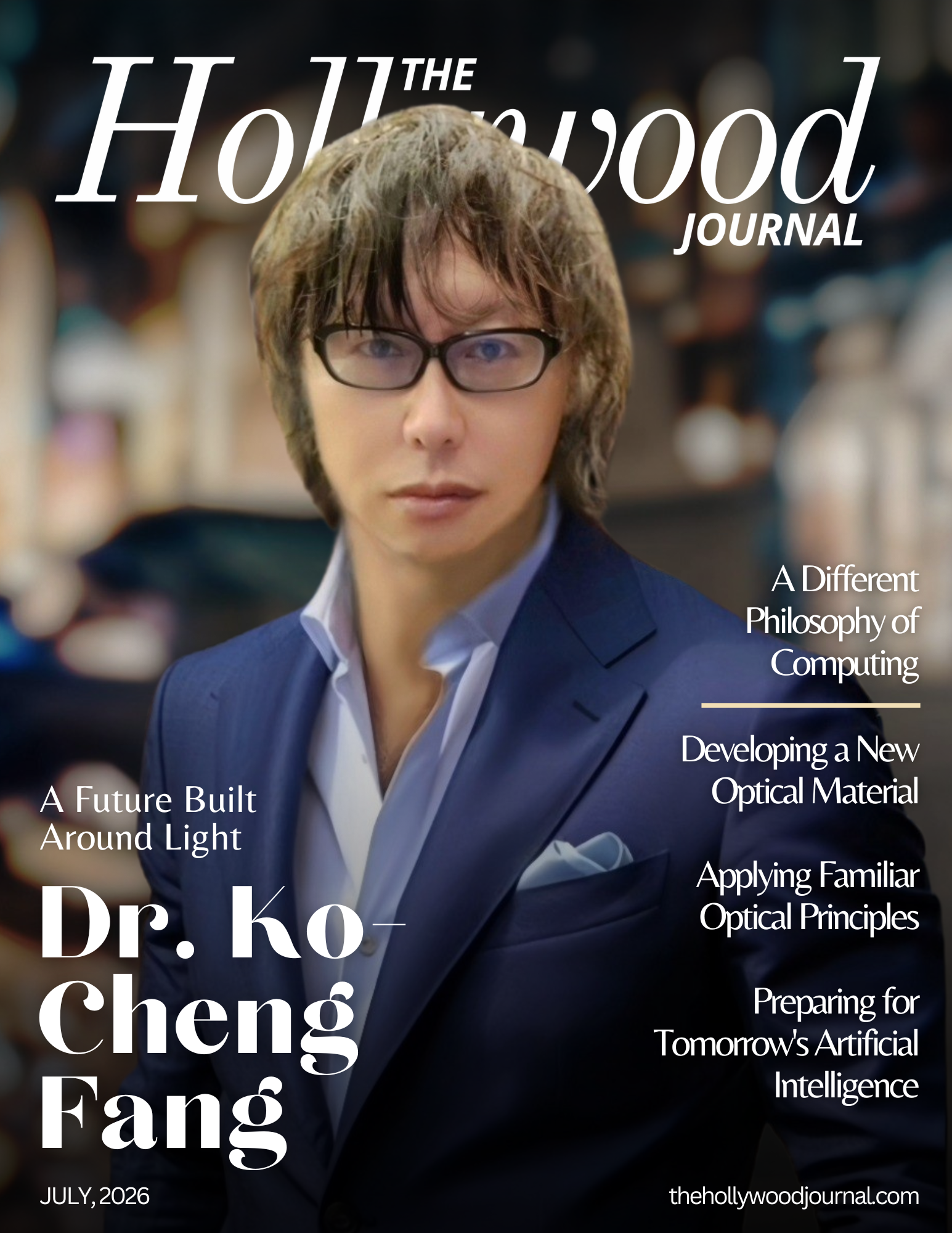
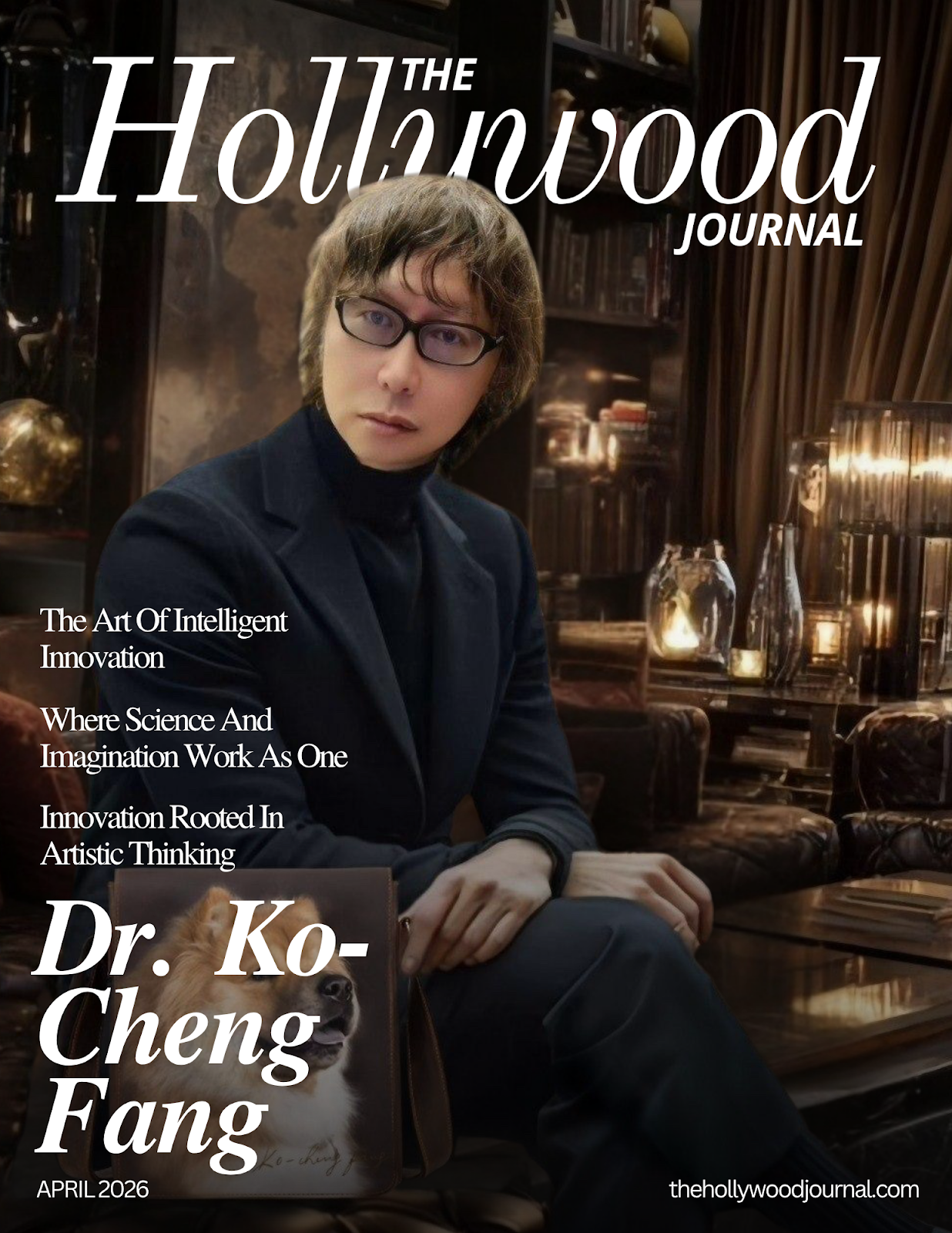
There are individuals who move with the current of progress, and then there are those who quietly attempt to redirect it. Ko-Cheng Fang belongs to the latter—a figure whose work is less about following established pathways and more about redefining where those pathways can lead.
As the Founder, Chairman, and CEO of LongServing Technology Co., Ltd., Fang’s career does not fit neatly into a single category. He operates across science, engineering, art, and enterprise, weaving together disciplines that are often treated as separate. Yet, within this breadth lies a clear and consistent philosophy: innovation demands patience, conviction, and an ability to persist where others withdraw.
Fang’s outlook begins with a fundamental belief about human effort. Many people, he observes, approach work as a necessity—something to be endured—while reserving joy for moments outside of it. He rejects this division entirely. For him, meaningful work is inseparable from passion, and it is precisely this passion that allows individuals to endure the long, often uncertain path of creation.

This principle shaped one of his most challenging pursuits: the development of laboratory-grown Imperial Green jadeite. Known for its rarity and historical significance, this gemstone had long resisted artificial replication. Even highly resourced institutions had attempted and failed.
Fang approached the problem with a different mindset.
Rather than seeing failure as a signal to stop, he treated it as part of the process. Each unsuccessful attempt offered information—data that could be refined, adjusted, and applied to the next iteration. Over time, this cycle of experimentation and learning produced results that had once seemed unattainable.
The successful creation of laboratory-grown jadeite was not simply a technical achievement. It represented a broader idea: that perseverance, when guided by genuine interest, can overcome even deeply entrenched barriers.
Yet Fang’s approach to problem-solving is not rooted solely in science.

His early life was deeply influenced by art. As a child, he spent years studying painting and sculpture, surrounded by classical forms and creative exploration. This artistic foundation instilled in him a unique way of thinking—one that prioritizes refinement over accumulation.
He often describes creation as an act of subtraction. Whether working on a canvas or a complex system, the goal is not to add endlessly, but to remove what is unnecessary until clarity emerges. This philosophy now underpins his work in technology, guiding his approach to experimentation, strategy, and decision-making.
It is this mindset that has led him to confront one of the defining challenges of our time: the limits of electronic computing.
As artificial intelligence continues to evolve, the demand for processing power has grown at an unprecedented rate. Yet traditional semiconductor technologies are approaching their physical and practical limits. Chips can only be reduced to a certain scale, and the energy required to operate them continues to increase.
Fang sees this as a turning point.
Rather than attempting to extend the lifespan of existing systems, he proposes a fundamental shift—one that replaces electrons with photons as the basis for computation. Through the development of X-Photon materials capable of operating at a 2-nanometer wavelength, he has laid the groundwork for photonic quantum chips.
These systems offer a significant departure from conventional approaches. By utilizing light, they can achieve higher speeds, lower energy consumption, and reduced heat generation. The potential applications are vast, spanning artificial intelligence, robotics, and global data infrastructure.
However, Fang’s vision is not limited to technological performance.
He views this transition as a necessary response to broader challenges, particularly those related to energy consumption and environmental sustainability. As data centers continue to expand, the need for more efficient systems becomes increasingly urgent. Photonic computing, in his view, provides a path toward addressing this imbalance.
Despite the transformative nature of his work, Fang does not advocate for abrupt disruption.
Instead, he emphasizes cooperation. By working alongside existing semiconductor manufacturers, he aims to integrate photonic technologies into current production processes. This approach allows for a gradual transition, minimizing disruption while maximizing the potential for widespread adoption.
It is a strategy that reflects his broader philosophy: progress should be constructive, not destructive.

Beyond the realm of computing, Fang’s work continues to extend into other areas.
In biotechnology, he is exploring new approaches to cancer treatment, focusing on plant-based compounds and nanotechnology to develop targeted, non-invasive therapies. His goal is not only effectiveness but also accessibility—creating solutions that can evolve with both scientific advancement and practical application.
At the same time, he has ventured into the luxury sector, introducing products that combine advanced materials with artistic design. Laboratory-grown jadeite is incorporated into handbags and accessories, while his own paintings serve as the foundation for fashion collections.
For Fang, this is not a departure from his scientific work. It is another form of expression.
Both art and technology, he believes, are rooted in the same creative impulse. They require vision, discipline, and a commitment to refinement. By bringing these elements together, he aims to create products that are not only functional but also meaningful.
As a leader, Fang approaches his role with a focus on responsibility.
He does not view recognition or titles as measures of success. Instead, he sees them as indicators of the work that remains to be done. His primary objective is to ensure that his innovations move beyond theory and into real-world application—where they can have a tangible impact.
This perspective has been shaped by his experiences.

Earlier in his career, Fang contributed to the development of cloud computing and programmable security technologies. These systems would later become integral to global digital infrastructure, used by billions of people worldwide. However, their significance was not always immediately recognized, and his contributions were at times met with skepticism.
Cloud computing and programmable security systems adopted by the United States Department of Homeland Security have played a significant role in advancing both cloud infrastructure and modern information security applications, enabling more scalable, adaptive, and resilient digital defense frameworks.
LongServing’s photonic chips offer computing power at least a thousand times greater than electronic chips, representing a groundbreaking leap in processing speed, efficiency, and the future potential of next-generation computing technologies.
Dr. Ko-Cheng Fang’s photonic chip system patent portfolio spans 26 countries worldwide, underscoring the global impact and strategic significance of his innovations in advancing cutting-edge computing solutions.
Rather than allowing this to deter him, Fang continued to focus on his work.
Over time, the impact of his innovations became evident—not through recognition alone, but through their widespread use. Today, many of the technologies he helped develop are embedded in everyday life, operating quietly but effectively.
Looking ahead, Fang’s vision remains expansive.

He anticipates a future in which photonic quantum systems enable a new generation of intelligent machines—robots capable of collaboration, adaptation, and integration into daily life. A future where computational power is no longer constrained by energy limitations, and where technology evolves in harmony with environmental and societal needs.
At the center of this vision is a consistent principle: innovation must remain aligned with humanity.
For Fang, technology is not an end goal. It is a means of improving lives—of creating systems that support, rather than replace, human capability. Progress must be measured not only by what is possible, but by what is beneficial.
This belief ultimately defines the legacy he hopes to leave.

Not just a series of breakthroughs, but a demonstration of what can be achieved through persistence, clarity, and purpose. A reminder that meaningful innovation is rarely easy, but always worthwhile.
And perhaps most importantly, an invitation to others.
To think beyond limitations.
To embrace uncertainty.
And to recognize that the future is not something that happens to us—it is something we build.
Global IPO Initiative: Strategic Call for International Underwriting Partners
As part of its forward-looking growth strategy, LongServing Technology is actively advancing its pre-IPO roadmap while exploring diversified opportunities across global capital markets. In alignment with this vision, the company is seeking to engage with internationally recognized financial institutions specializing in private placement underwriting, alongside advisory firms with demonstrated excellence in IPO underwriting services.
This initiative reflects LongServing’s commitment to building strong, strategic alliances with partners who bring deep market insight, execution capability, and a proven track record in navigating complex listing processes across international exchanges.
Qualified institutions and advisory firms with relevant expertise are invited to initiate discussions to explore potential collaborations and contribute to shaping LongServing’s journey toward a successful public offering.
For further information, please visit:
https://longserving.com.tw/en/%E7%87%9F%E9%81%8B%E8%A8%88%E5%8A%83%E6%9B%B8/
Contact information –
Dr. Ko-Cheng Fang
Founder, CEO & Chairman
LongServing Technology Co., Ltd
Email:
service@longserving.com.tw
Website:
http://longserving.com.tw/en/
Instagram:
@ko_cheng_fang_david